A diverse cacao heritage
A USDA led study of naturalized cacao across Puerto Rico identified four genetic backgrounds: Criollo, Trinitario, Amelonado and Upper Amazon Forastero. Most of the naturalized trees studied showed Criollo ancestry, adding another layer to the island's distinctive cacao story.
Genetics matter because they help shape the natural chemistry of cacao, including the balance of methylxanthines and flavanols that contribute to its character.
A living collection of cacao
Puerto Rico's commercial cacao farms draw from a broad mix of planting material, including the TARS Series, Jeanmarie JM selections, ancestral Criollo material and trees propagated from seed. That diversity gives the island a living cacao landscape rather than a single uniform profile.
Mayagüez is also home to the USDA Tropical Agriculture Research Station cacao collection, an important resource for preserving and studying cacao diversity in Puerto Rico.
The west, a cacao region
The Mayagüez agricultural region, which includes Isabela, Aguadilla, Moca, Aguada, Rincón, Añasco and Mayagüez, represented 40 percent of the cacao acreage included in the 2024 Puerto Rico sector study. The report documented 116.5 cuerdas of cacao across 23 farms in the region.
For BAJO DOSEL, that makes Aguada part of a larger western cacao corridor where cultivation, research and flavor development come together.
Flavor begins before the cup
Among Puerto Rican growers interviewed for the 2024 report, fermentation was typically carried out for six days and drying was generally done in the sun, with an average drying period of six to eight days.
These steps help shape the aroma, flavor precursors and natural chemistry that make cacao expressive long before it reaches the cup.
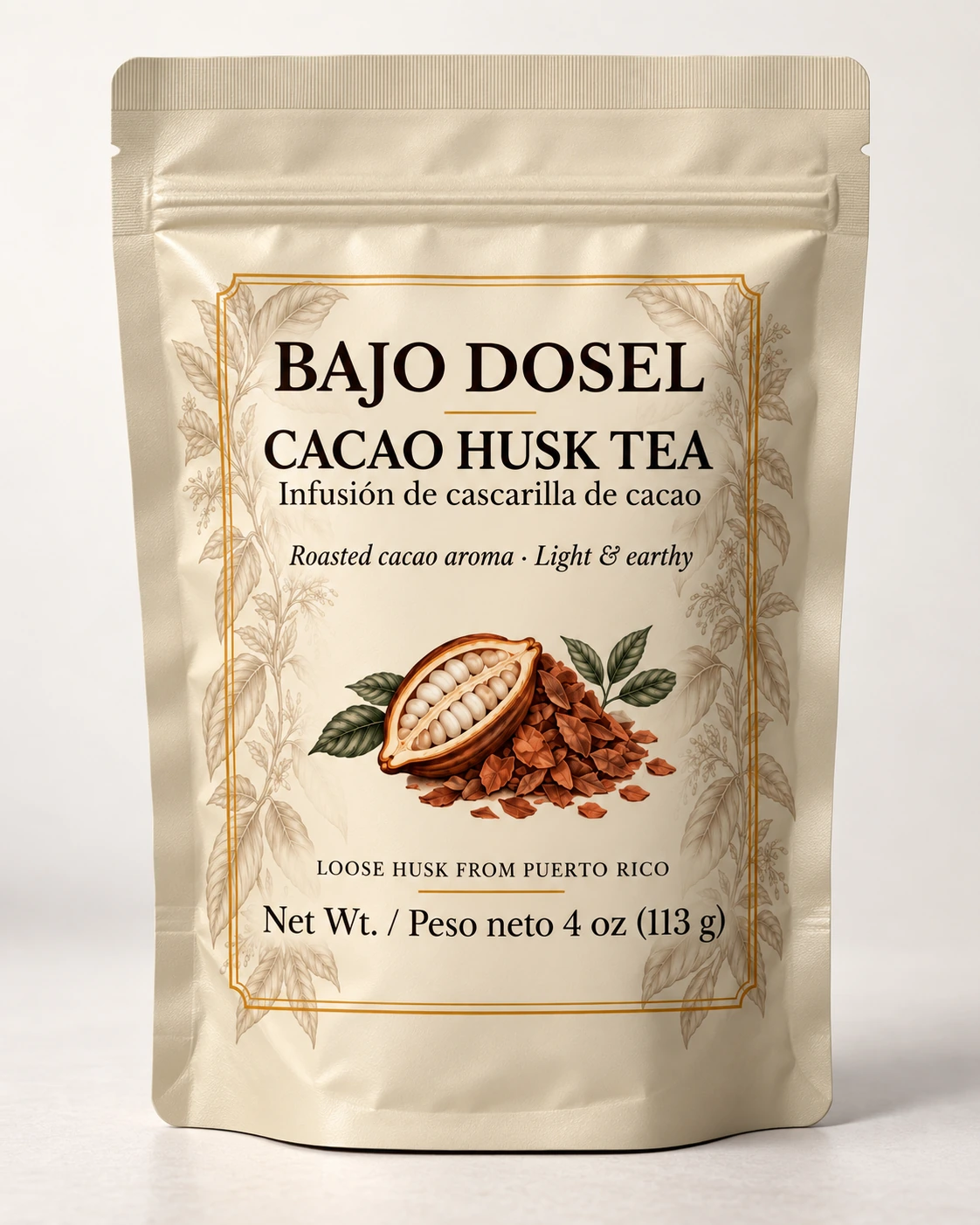
The natural chemistry of cacao husk
Cacao husk naturally carries methylxanthines such as theobromine and caffeine, along with polyphenols and other plant compounds that contribute to cacao's complexity. In cacao shell research, theobromine is typically the dominant methylxanthine.
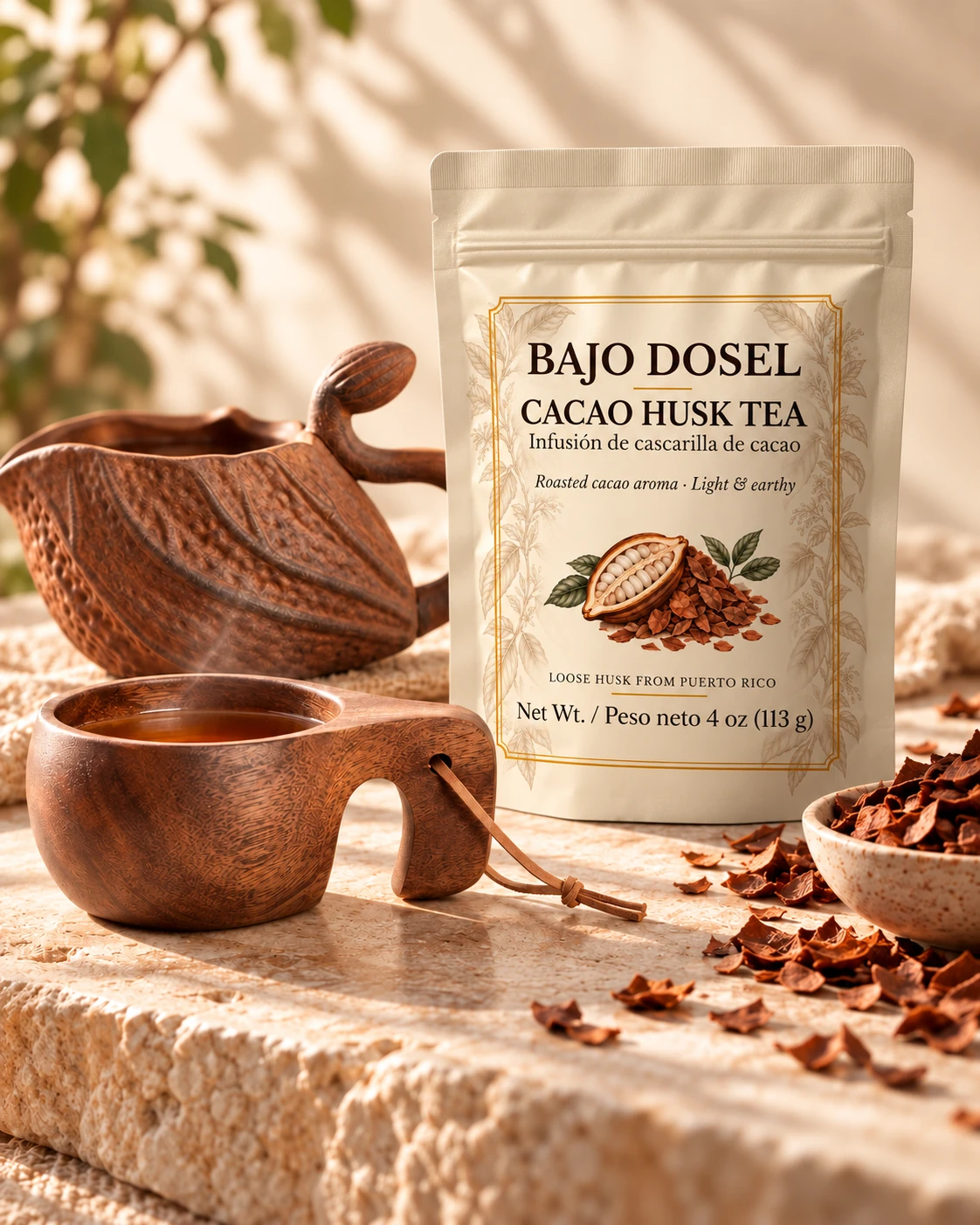
This is part of what makes the husk so compelling. The shell that surrounds the cacao bean still carries aroma, flavor and a meaningful part of cacao's natural chemistry, offering another way to experience the fruit beyond chocolate.
Cacao chemistry naturally varies with genetics, origin and processing, which is exactly what makes origin worth discovering.