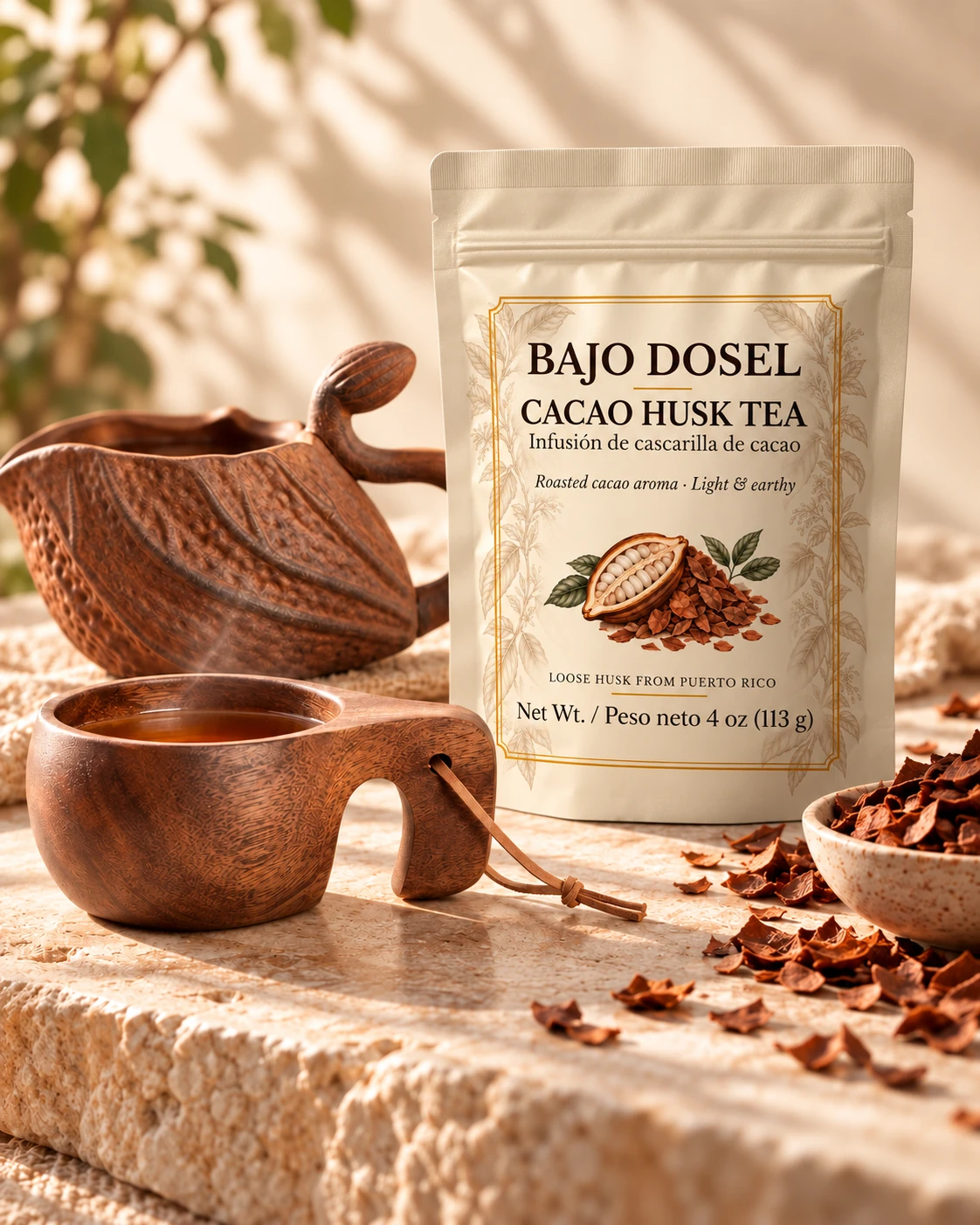
Most people meet cacao as chocolate. Before chocolate, however, there is a bean—and around that bean is a thin shell commonly called the cacao husk, cacao shell or, in Spanish, cascarilla de cacao. When the shell is steeped in hot water, it creates a fragrant cacao infusion often called cacao husk tea or cacao shell tea.
Cacao husk tea is an herbal-style infusion made by steeping cacao bean shells in hot water. It is not tea from Camellia sinensis; the word “tea” describes the preparation.
The part of cacao most people never meet
The cacao bean develops inside the fruit of the cacao tree. During chocolate processing, the bean is separated from its thin outer shell. That shell still carries cacao aroma and flavor, which is why it can be brewed on its own.
For BAJO DOSEL, that shell is not treated as an afterthought. It is the beginning of a different cacao experience: lighter than drinking chocolate, made with a single cacao ingredient, and centered on aroma, origin and preparation.
What does cacao husk tea taste like?
Expect cacao aroma rather than the sweetness or richness of a chocolate bar. A brewed cup can show notes that read as roasted, earthy and gently chocolate-like, while the exact character changes with cacao origin, roast and processing.
Because the husk itself is unsweetened, the cup is naturally different from hot cocoa. Think of it as a clear infusion with the aromatic side of cacao at the center.
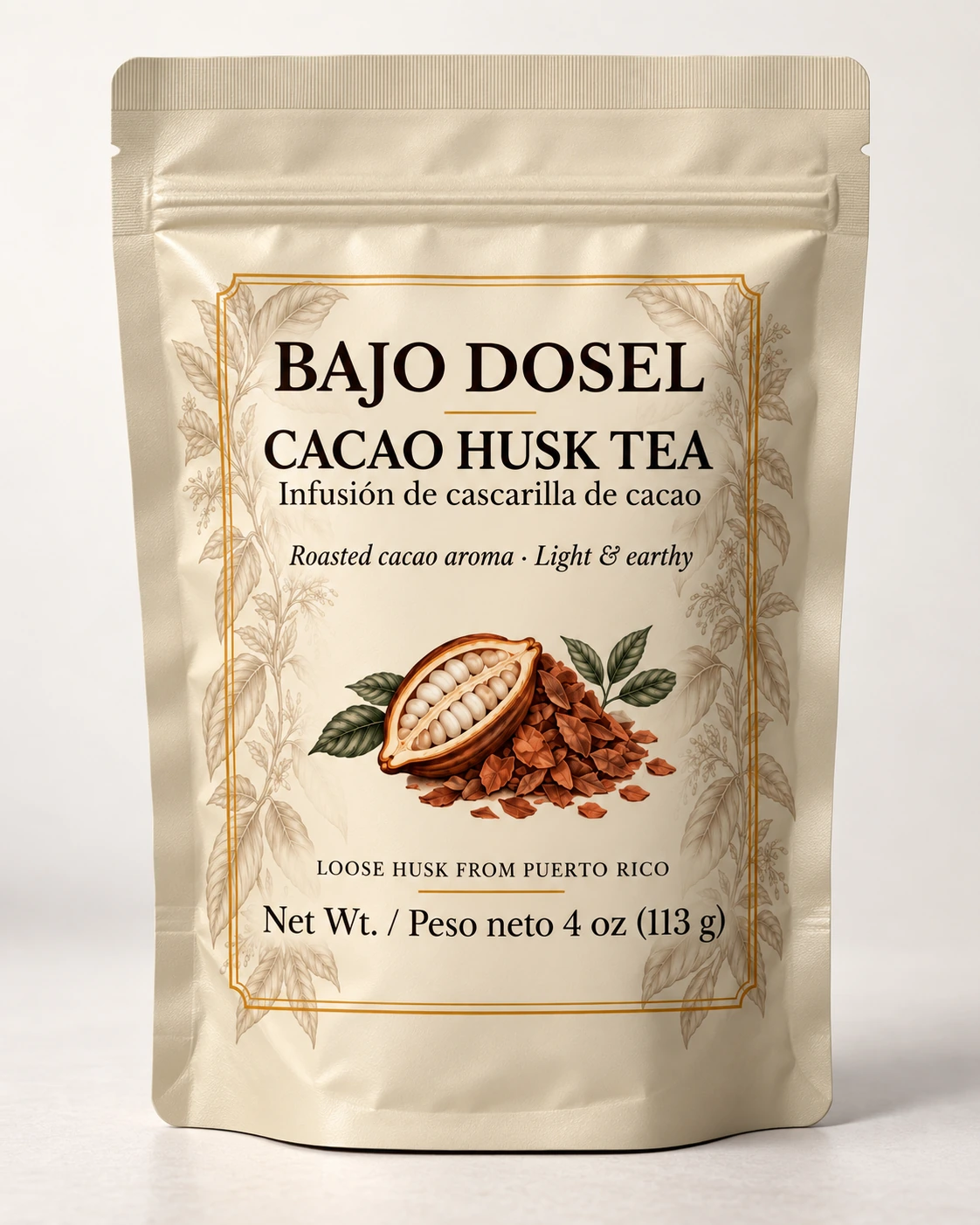
BAJO DOSEL Cacao Husk Tea · Puerto Rico origin · Net Wt. 4 oz (113 g)
Does cacao husk tea contain caffeine?
The safest answer is: cacao husk should not automatically be described as caffeine-free. Scientific reviews of cocoa bean shell report naturally occurring methylxanthines, particularly theobromine, together with smaller amounts of caffeine. Published levels vary with factors such as origin and processing.
That makes cacao husk chemically different from coffee, which is typically caffeine-led. It also means that a precise caffeine amount for a particular finished product should come from product-specific laboratory testing rather than from a generic claim.
Peer-reviewed cocoa bean shell literature reports both theobromine and caffeine. Until a finished product is tested specifically, we prefer the more accurate statement: cacao husk has its own naturally occurring methylxanthine profile.
How to brew cacao husk tea
Our starting preparation is intentionally simple. It gives the husk enough time to open aromatically without turning the ritual into a complicated recipe.
From there, the cup can be adjusted to taste: more husk for a stronger aroma, a longer steep for greater extraction, or cooling after brewing for a cold cacao infusion.
Why origin matters
Cacao is an agricultural product, so origin is part of the experience. Genetics, growing conditions, fermentation, drying and roasting can all influence what eventually reaches the cup.
BAJO DOSEL’s first chapter begins with cacao from Puerto Rico. Rather than separating the ingredient from its place, we want origin to remain visible as part of how the product is understood and enjoyed.
Cacao beyond chocolate
Cacao husk tea does not try to imitate coffee or replace chocolate. It simply shows another side of the same plant. That is the idea behind BAJO DOSEL: Origin · Flavor · Discovery.
One ingredient, hot water and a few minutes are enough to experience a part of cacao that usually remains outside the familiar chocolate story.
¿Qué es la cascarilla de cacao?
La cascarilla de cacao es la capa fina que rodea el grano de cacao. Al infusionarla en agua caliente, libera aromas y sabores propios del cacao y produce una bebida ligera conocida como té de cascarilla de cacao o infusión de cacao.
No debe asumirse que la cascarilla es completamente libre de cafeína. La literatura científica sobre la cáscara del grano de cacao reporta teobromina como la metilxantina predominante, junto con cantidades menores de cafeína; los niveles pueden variar según el origen y el procesamiento.
Sources & further reading
How to brew cacao husk tea
A simple four-step guide using the same preparation shown on BAJO DOSEL.